



Inhaltsübersicht
The best maintenance strategies
Machine breakdowns, downtime and even accidents are a horror scenario in any business. Maintenance strategies for systems and machines help to avoid breakdowns and make production as efficient as possible.
In Industry 4.0, with its constantly evolving complex technical processes, maintenance strategies are an important, even indispensable topic. Identifying potential problems at an early stage prevents downtime and keeps production quality and speed constant.
There are a whole range of factors to consider to ensure that the condition of appliances and machines is always in the best possible condition for production. Accordingly, maintenance strategies are now feasible in a wide variety of forms, with a lot or little effort and for very different budgets.
However, with digital tools and a planned, structured approach, cost-efficient and successful maintenance can be implemented.
We provide information on the key aspects of maintenance: let’s take a look at different maintenance strategies and what characterizes them, what needs to be considered when choosing the right strategy and which approaches work and how.
If you would like to book a demo of our tool directly – you can find our contact person right here.
Why maintenance not only saves costs, but also determines the performance of industries
Smooth processes are a basic prerequisite for profitable production. In this respect, maintenance measures, regardless of the form they take, are a natural part of any corporate strategy.
If breakdowns occur, this increases costs, for example for maintenance expenses, and reduces overall productivity. Last but not least, regular maintenance and care also increase the service life of machines and systems. From this perspective, maintenance measures are an investment in preserving the value of your company.
Well-maintained machines work more efficiently, reduce energy consumption and improve operational safety – a decisive competitive factor in industry.
Maintenance creates added value
Low downtimes, reliable product quality, efficient processes: all this can be achieved with a carefully adhered to maintenance strategy.
In the course of maintenance, ongoing analysis also often reveals potential for improvement: This makes it easier to modernize and adapt machines and systems. In the long term, this increases the company’s own competitiveness, as those who can react flexibly to changes in the market are best prepared to meet customer requirements and wishes – even if these requirements are constantly changing.

Various maintenance strategies presented
The maturity level in maintenance describes the level of development of a company in terms of its maintenance and servicing practices. Companies with a low maturity level often rely on reactive maintenance, while advanced companies use modern strategies such as predictive maintenance. The maturity level depends on factors such as technology use, data analysis capabilities and organizational structure. The higher the maturity level, the more efficient and predictive the maintenance measures are.
Reactive maintenance
Reactive maintenance, also known as corrective maintenance, is based on a simple principle: machines and systems are only repaired when they have failed. This strategy has the advantage that no regular maintenance work needs to be carried out, which saves costs in the short term. However, the disadvantages are considerable: unplanned downtimes can lead to high production losses, jeopardize safety and impair the reliability of the systems. In many branches of industry, this strategy is therefore only used in exceptional cases.
Preventive maintenance
Predictive maintenance, also known as preventive maintenance, aims to avoid breakdowns through planned maintenance work. This involves servicing machines at set intervals, regardless of their actual condition. This strategy improves reliability and helps to prevent major damage. One disadvantage, however, is that maintenance activities may be carried out too early or too late, which either causes unnecessary costs or increases the risk of unexpected breakdowns.
Condition-based maintenance
Condition-based maintenance (CBM) goes beyond preventive maintenance by analyzing the actual condition of the systems. By using sensors and modern data analysis, companies can determine the ideal time for maintenance work. This reduces unnecessary repairs and extends the service life of the machines. One disadvantage of this strategy is the higher initial investment for the necessary infrastructure and the collection of relevant data.
Predictive maintenance
Predictive maintenance uses advanced technologies such as artificial intelligence and machine learning to predict potential failures. It analyzes data from sensors, historical maintenance reports and other sources to take optimal action before an impending failure occurs. This strategy helps to minimize downtime, increases efficiency and reduces costs. However, it requires sophisticated maintenance management and considerable investment in digital systems.
Hybrid maintenance
Many companies now rely on a hybrid maintenance strategy that combines various practices. Depending on the type of system, production requirements and economic factors, preventive maintenance, condition-based maintenance and predictive maintenance are combined. This flexible strategy allows costs to be optimized, safety to be increased and the efficiency of the machines to be improved in the long term.all approaches, whether corrective maintenance, predictive maintenance approaches or a hybrid strategy: you need precise work instructions in digital form for every type of maintenance. We provide the right tool for this: Let us explain to you in a free consultation how the tepcon “instructor” supports maintenance work, inspections and the necessary repairs.
Are you in a hurry? Click here to go directly to our product, the tepcon instructor!
Total Productive Maintenance (TPM) as a modern maintenance strategy
In industry, choosing the right maintenance strategies plays a decisive role in the efficient operation of plant and machinery. One proven strategy is Total Productive Maintenance (TPM), which is based on a comprehensive maintenance philosophy.
What is Total Productive Maintenance (TPM)?
TPM is a proactive and integrative type of maintenance in which all employees of a company, from production to management level, are involved in maintenance activities. The aim is to avoid unplanned breakdowns, increase the reliability of equipment and boost productivity. The management system is constantly on the lookout, at all levels of the company, for breaking points where loss and waste reduce the efficiency of production.
TPM is based on eight pillars:
- Autonomous maintenance – operators carry out simple maintenance tasks themselves
- Planned maintenance – regular, preventive measures to minimize malfunctions
- Quality management – error prevention through continuous improvement
- Targeted improvement – analysis and optimization of weak points
- Early maintenance – integration of maintenance requirements into the development of new systems
- Training and further education – training employees in maintenance and servicing strategies
- Occupational safety and environmental protection – reducing risks for employees and the environment
- Digitalization – use of modern software tools for data analysis and process optimization
Advantages of TPM
The implementation of TPM brings numerous advantages:
- Reduced downtimes and maintenance costs thanks to predictive maintenance.
- Extended service life of systems and machines.
- Increased productivity and availability thanks to minimized disruptions.
- Early detection of potential problems to optimize maintenance costs.
- Better involvement of employees through training and responsibility.
However, there are also potential disadvantages:
- High initial implementation costs due to training and process adjustments.
- Resistance within the company, as the new strategy requires changes in the organization.
- Possible additional costs in the initial phase, as a new system has to be set up first.

The role of digital tools in the TPM strategy
The integration of digital tools plays a crucial role in the successful implementation of TPM. Modern software solutions enable companies to identify potential problems at an early stage by continuously recording and evaluating data on machine statuses. Automated logging of faults allows causes to be analyzed and targeted countermeasures to be initiated.
The creation of digital work instructions also ensures standardized and efficient measures that can be tracked by employees.
Another important aspect is predictive maintenance, which is based on real-time data and thus minimizes unplanned downtime.
In addition, the use of digital tools facilitates the selection of suitable spare parts and resources, enabling companies to reduce their maintenance costs and optimize their maintenance strategies.
Last but not least, you can use a TPM strategy to transfer parts of maintenance strategies to customers, for example by providing self-help instructions.
With the help of Industry 4.0 technologies, the entire infrastructure becomes more transparent, efficient and reliable, leading to improved productivity and availability of systems and machines in the long term.
Finding the right maintenance strategy – how to do it
The selection of the best maintenance strategies depends on various factors, including the type of machinery, its condition and the specific requirements of the operation.
A structured overview of existing maintenance strategies in advance will help you to make the right decision for your business. Companies should consider both technical and economic aspects.
Inspections and analyses of the existing infrastructure are the first step in determining the optimum maintenance approach.
Book your personal demo and experience the benefits directly!
Challenges in maintenance
One of the biggest challenges in maintenance is the balance between preventive measures and economic efficiency. While preventive maintenance, for example, helps to avoid unplanned downtime and breakdowns, it can also lead to unnecessary maintenance activities. In addition, condition-based maintenance requires modern technologies and qualified personnel.
In general, companies need to continuously adapt their strategy in order to keep pace with developments in the world of industrial maintenance.
The cost factor in maintenance
Maintenance costs play a decisive role in choosing the right strategy.
While reactive maintenance may seem cost-effective in the short term, high repair costs and production losses can have considerable financial disadvantages in the long term.
Although preventive maintenance incurs regular costs, it helps to minimize unplanned downtimes.
Condition-based maintenance and predictive maintenance require investment in sensors, software and training, but can reduce maintenance costs and increase operational reliability in the long term.
Companies must therefore carry out a careful analysis in order to choose the most economically viable approach. The right strategy ensures that everything is done to optimize machine performance while keeping an eye on costs.
Last but not least, the value of the plant and machinery available in the company plays its part in the selection of suitable maintenance strategies. The qualifications of the employees responsible for maintenance will also need to be taken into account when calculating costs and any training requirements.
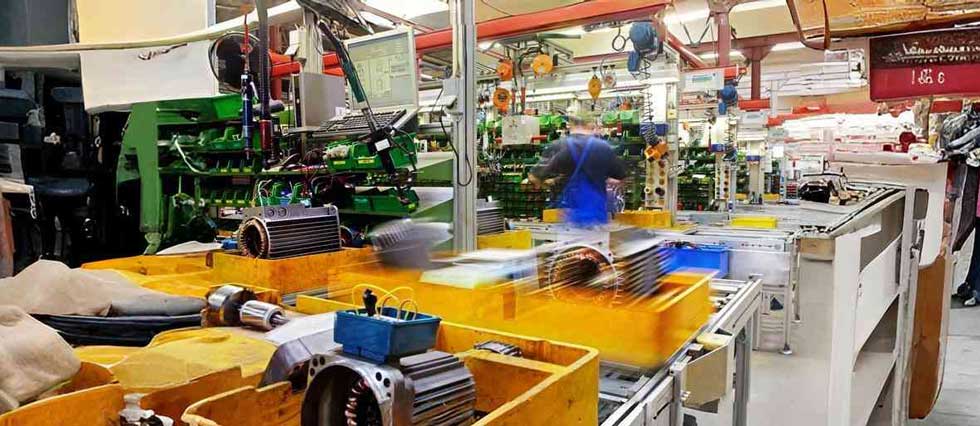
Maintenance of your systems with the tepcon “instructor”
As a rule, a healthy mix of different measures proves to be the best strategy: Depending on the condition of your systems, the expected performance and your focus, which may be more on personnel or cost savings, for example, different methods are available for different areas of operation.
Everywhere, however, inspections and data for analysis play just as important a role as precise work instructions for the individual processes. Digital work instructions make maintenance work possible with relatively few personnel, while worker guidance also enables self-monitoring during execution. Digitized processes help to collect data and results from inspections, and new employees can also take over maintenance and repair work much faster with the right digital work instructions.
Processes can be optimized with our ticket system, which can also be useful for a CIP process. Do you want to know how the tepcon “instructor” supports you in the maintenance of your machines? Let us show you our demo or book a consultation directly.